Read these two words slowly:
urgent, unread
.
.
.
For many of us, without any further context, these two words may bring a flush of reaction, where you associate a meaning of “that task was urgent and I didn’t address it”, causing a subtle but immediate sensation of heaviness in the chest.
For others, these two words may mean “something is on fire, and I’m the one lagging behind”, causing them to start shaking their legs in anticipation.
For a few of you, these examples changed your initial perception of those words.
This simple experience highlights – in the sum of the parts, there are only the parts, that is, we are meaning-making machines.
And connects two important aspects of psychology and neurobiology, which when understood, shows why embodied cognition is a better tool for making better decisions.
So what really happened in your mind when you read those two words, and why did your body join the conversation?
Associative Memory
Daniel Kahneman in his book Thinking, Fast and Slow highlights how our minds work: one cue automatically activates a related idea, which then cascades down rapidly into a meaning we finally settle on, all happening without our control.
He refers to this phenomenon as “associative memory” – a process of word-to-word meaning activation that is fast and involuntary.
“Simple words are sufficient for the brain to fill a whole narrative.”
Further, that narrative evokes a body response that determines our behavior and what we do next or how we perceive whatever comes next.
Associative memory is the operation of System 1 thinking (quick, automatic, effortless). You have to will System 2 (effortful, rational, reasonable) to question and audit those associations, and decide whether your behaviour should change.
Prediction Loop
Where associative memory emphasizes meaning-making, Lisa Feldman Barrett’s book: How Emotions are Made, highlights the inner workings of the brain that explains why this happens.
Found this helpful?
If this article resonated with you, please share it on LinkedIn to help me spread the word on Mindful Productivity.
When presented with a cue, the brain makes an initial prediction (a guess) and then continuously updates it using interoceptive signals.
Interoception is the brain, processing signals from inside the body (heartbeat, breath, gut sensations) alongside past experience (concepts) and the current environment.
The more attuned we are to this feedback channel… predict -> sense -> correct -> update, the more likely we are to make better judgments on those cues.
In other words, interoception ensures that meaning-making is more closely tied to our current situation than to simply anchor on our habits or experiences.
🍪 Fortune Cookie:
These two concepts,
- the associative memory from cognitive psychology, and
- prediction loops from modern affective neuroscience
highlight the importance of embodied cognition.
Embodied cognition means our reactions aren’t purely mental inferences; they’re bodily and predictive.
“We think with our body, not only with our brain.”
Skills that allow us to listen to our body, in-as-much-as our brains help us connect the correct dots, identify errors in the way we jump to meaning (prediction errors), and ultimately lead us to make better decisions.
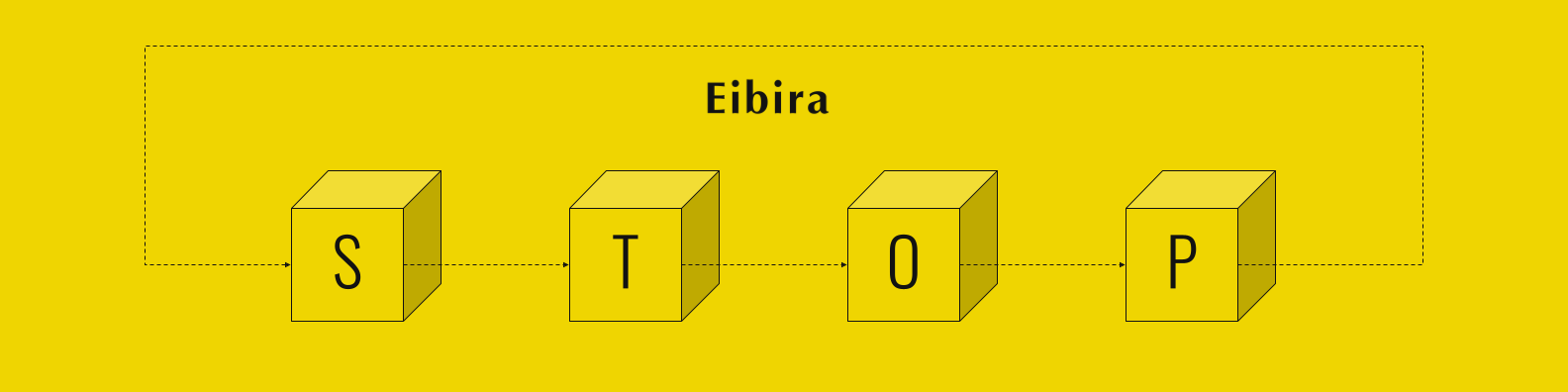
Eibira is just that, a collection of such skills to enable this brain+body communication, a practice leading us to making better decisions.
Related article:
 Nikhil Kabadi