Speed is synonymous with technology, and every innovation has locked horns with the extremely slow and stable human biology.
But AI is an orbit-shifting change. It challenges evolutionary forces, especially the human brain, in a way unlike anything we have seen before.
As if a sedentary lifestyle spent in isolation with a laptop, accompanied by mobile-only friends, and a steady diet of Coke and chips were insufficient to whack natural selection on its butt, we now have AI as the new incumbent, birthed to fast-track human dysevolution.
How do I know?
.
.
.
If history is any guide…
We let the sugar industry plump up and dress in Red an otherwise saintly Santa Claus to substitute Coke for water… In one fell swoop, we dulled our biological intelligence.
.
.
.
We gave social media full permission to enter our otherwise uninteresting daily lives and create a make-believe celebrity lifestyle… In the two decades since, our social intelligence stands perforated.
.
.
.
We allowed e-commerce to convince us that we need everything right now, because you and I are gonna die tomorrow… Instant gratification has extracted a significant toll on our emotional intelligence.
.
.
.
And today, AI asks our brains to offload its cognitive work (not just complex work like GPS or calculators, but even passive and menial thinking—Help me write a WhatsApp message!), so that humanity gets more time to fill it with activities. As if busyness weren’t an epidemic already… AI is poised to rewire cognitive intelligence, not towards growth, but towards atrophy.
Cognitive Recession
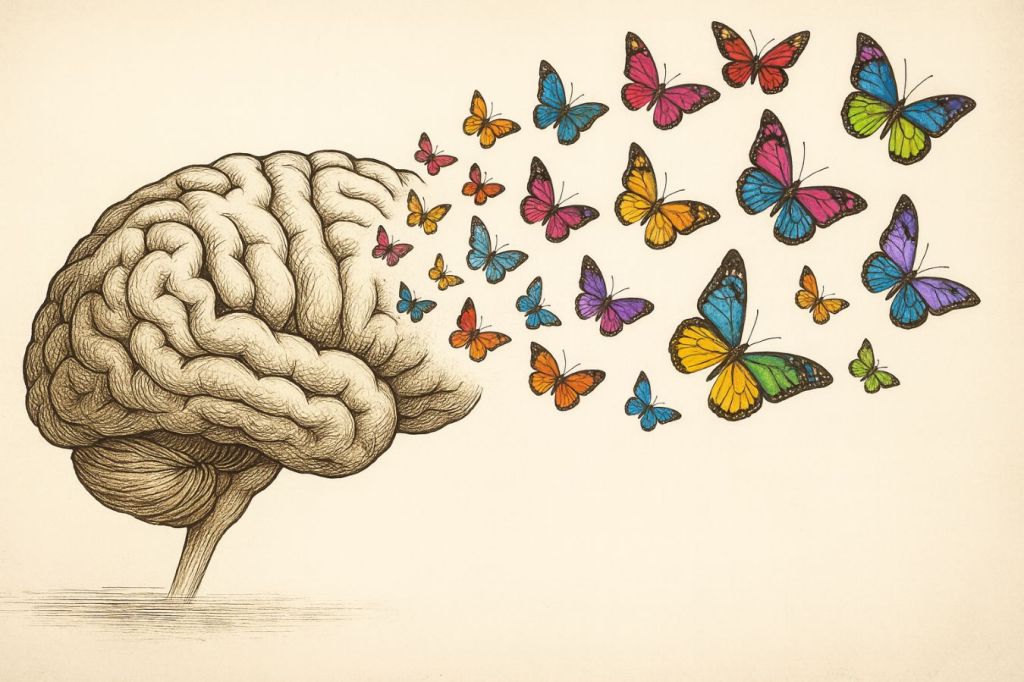
The threat of cognitive recession: the gradual decline of our collective ability to think deeply, reason critically, and question thoughtfully — is a dark, hidden, and clinical threat posed by AI and its agents. This is a far greater heist than the chaos of job loss and improved efficiency it has come to be associated with.
Will the next decade or so of AI agents entrap us sufficiently that we become cognitively disengaged and fast-track the risk of cognitive recession?
Or, is this all hyperbole?
Unfortunately, we will only know after a decade.
But the implications of low cognitive engagement are very real on the human brain.
The Onslaught on Thinking
Over an extended period of offloading the thinking, just this one factor – low cognitive engagement – alone can increase dementia risk by up to 40%, based on longitudinal studies. Even when other factors, such as education or lifestyle, are controlled.
AI is also a double-edged ninja sword. It not only reduces the need for reasoning and thinking, but it also erodes the need for memory retention and recall.
A prompt goes beyond retrieving an answer to a current question. It’s a gateway for the lazy brain to offshore its job description. What starts as a simple question, dovetails into AI managing your needs, requirements, reminders, choices, and everything that the brain strives to build memories and remember.
Ever seen your AI offering a harmless question: “Would you like me to add the reminder for you?“
And… is it any relief that the organisations splurging the most moolah on AI are the very same social media companies that promised unification around commonality, but ended up exacerbating the divide by incentivising differences?
The real cost of AI is not the $20/month fees. The actual price being extracted from us may be a slow, minute, and prompt-by-prompt decline of our collective cognitive engagement.
AI is here to stay and thrive, just like social media, packaged food, and one-minute deliveries.
And AI is only going to become better. As long as AI is seen as a necessary investment for the survival of the organisation, the impetus to feed its growth will far exceed the desire for the survival of the human species.
🍪 Fortune Cookie:
As someone who weeks back glorified AI in this blog, I’m in no way against its dominance. AI has surpassed the point of debating its merits or fretting over its demerits.
AI has positioned itself as a must learn, must-engage, and must-invest tool. My own frequency and depth of using AI is increasing with every passing week.
So, the only way we can safeguard our future selves and protect our brains from the real threat of cognitive recession is to engage our brains in meaningful and mindful activities actively.
In a world where the primary goal is to make everyday living as agentic as possible, the small mindful activities we cultivate today will become the difference a decade from now between a healthy and a diseased brain.
It’s worth reiterating:
The main risk of AI is not that we will all become ‘dumber’ or remain jobless. The absolute risk of AI is the slow and steady stealing away of a brain’s capacity to think, reason, and question everyday challenges, escalating our risk of brain diseases like dementia.
What are such mindful activities that can help you keep an active brain amidst AI? Let’s look at them in the next article.
As silly as it sounds, we need to prioritise thinking.
Found this helpful?
If this article resonated with you, please share it on LinkedIn to help me spread the word on Mindful Productivity.
 Nikhil Kabadi