A little over two months into my start-up ride, the journey so far has been about introspection, learning, and quickly discarding product ideas and some of my long-held beliefs.
Few things that I learned and hope may resonate with you too:
Listening to my body
As I dive deeper into understanding healthspan versus lifespan, one interesting discovery has been the importance of listening to my body.
It involves letting go of my fixation on metrics in favor of tuning into sensations. I’ve stopped counting laps while swimming, logging gym hours or reps, hours I work, push-up counts, or obsessing over hours of sleep. The only thing that matters now is what my body tells me in each moment – and keeping an open mind while listening to it.
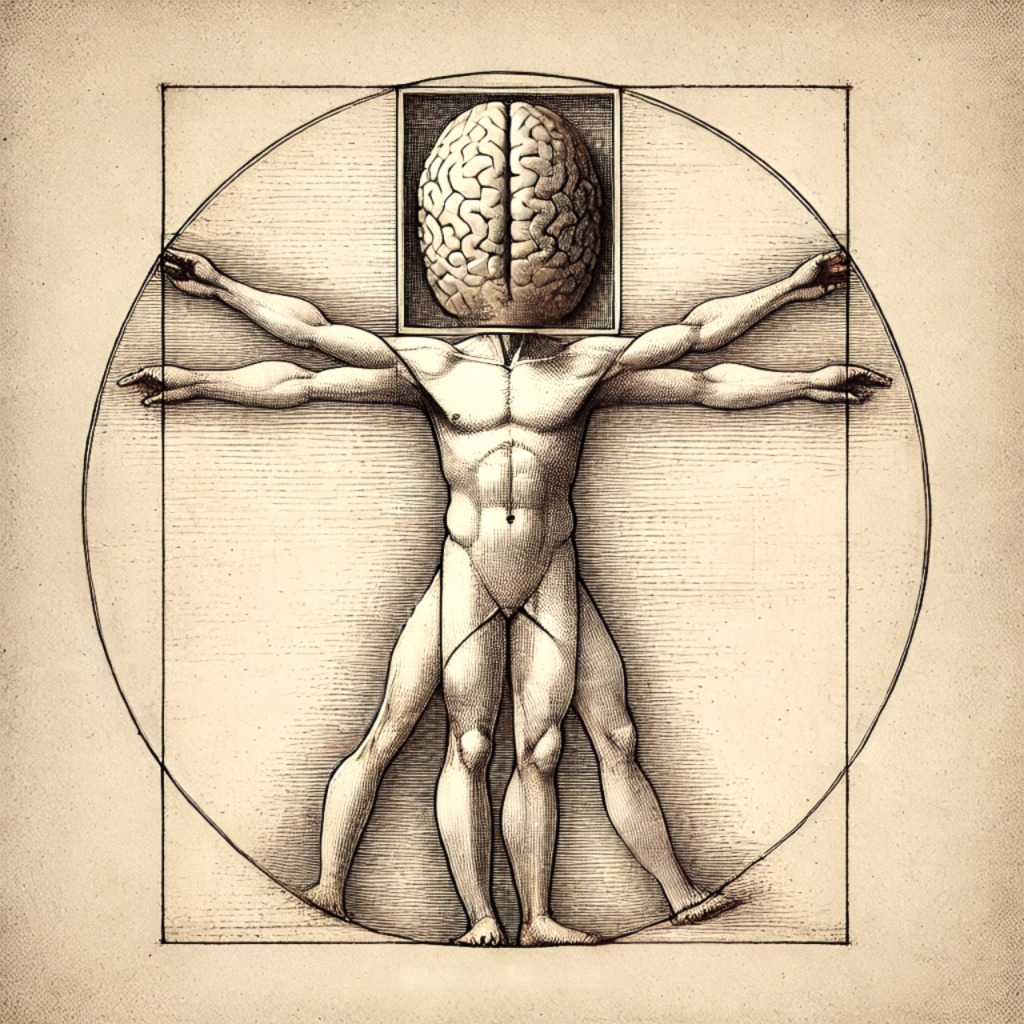
This simple shift from-brain-to-body has brought immense relief and a newfound sense of freedom. I’ve found myself doing more and feeling better, free from the burden of quantifying and meeting arbitrary standards.
Listening to my body is as simple as knowing when to stop swimming because my shoulder says, “One more lap, and I’ll sprain.” Or, when my legs tell me, “You’ve stood long enough; sit now.” Even my prefrontal cortex has its limits and says, “No more creative thinking – it’s time to step away from work.”
This practice aligns with our biology: our bodies have roughly 100 million sensory neurons sending signals to the brain, but only 1 million motor neurons sending signals from the brain to the body. It makes perfect sense: let the body do the talking, and let the brain do the listening.
This one habit has been a game changer! Better sleep, improved health, and sharper focus than I could have imagined.
P.S.: If you are interested in starting this practice, here is an exercise to help you get started with listening to your body.
Avoiding implicit bias and circular thinking
Mindful productivity is the most productive way to work – because it is mindful. This is a perfect way to eat your own tail. I realized that some of my thoughts on mindful productivity came with implicit biases rooted in my past experiences.
To challenge my assumptions, the last few months I’ve been speaking to a variety of people about what productivity means to them – specifically, how they make decisions.
I designed a general empathy questionnaire for face-to-face interviews to explore people’s hopes, pains, and barriers to mindful living and decision-making. The insights have been fascinating, already poking holes in my initial ideas and prompting me to discard my first and second product prototypes.
Once I have a diverse enough sample, I’ll share the results.
P.S.: I’d love your input. If you’re willing to participate in this survey, drop me an InMail!
Mindful Productivity Framework
The development of the Mindful Productivity Framework (MPF) has been the biggest highlight. MPF has become my guiding principle for creating practical skills that help people make better decisions. These skills will eventually be embedded in the product.

What’s fascinating is how deeply MPF is rooted in biology (brain-body interaction), psychology (behavioral patterns and biases), and evolutionary forces (our gene-environment interaction).
The MPF framework is the STOP formula.
MPF = Sense, Trace, Orchestrate, Ponder
As much as it is a reminder to stop and pause, it’s a simple yet practical method for improving the quality of decisions, productivity, and overall well-being.
Fighting demons
Despite practicing the habit of listening to my body, years of conditioning to prioritize my brain means I’m acutely aware of each passing day without having finalized the product solution.
Each day, I feel the pull to dive into product development – documenting user journeys, creating lo-fi wireframes, working on the tech stack, or fiddling with start-up policies.
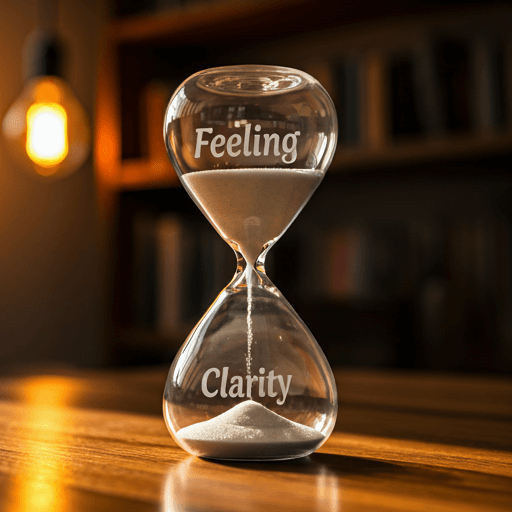
And yet, I wake up each morning knowing that my purpose is to create something that helps people make better decisions, live happier lives, and find meaningful work.
Balancing what I know with what I need to know is the constant challenge. How much knowledge is “enough” to start the product journey? I think I’m getting there.
P.S.: If you’re an entrepreneur, I’d love to know – how did you decide you had an MVP ready for GTM?
🍪 Fortune Cookie:
“How small a thought it takes to fill someone’s whole life?” – Ludwig Wittgenstein
Books I read
Here’s a list of books I’ve read or revisited since starting this journey. Each has helped shape my thinking about mindful productivity and entrepreneurship.
If you know a book that has helped you make better decisions or find meaningful work, do recommend. I’m on LinkedIn here.
Mindfulness and Awareness
- The Heart of the Buddha’s Teaching – Thich Nhat Hanh
- Awareness – Anthony DeMello
- The Wisdom of Insecurity – Alan Watts
- Big Panda & Tiny Dragon – James Norbury
Psychology, Philosophy, and Decision-Making
- The Courage to Be Disliked – Ichiro Kishimi , Fumitake Koga
- Metamorphosis – Franz Kafka
- Same as Ever – Morgan Housel
- The Psychology of Money – Morgan Housel
- Building a Life Worth Living – Marsha M. Linehan
- How Proust Can Change Your Life – Alain De Botton
Neurobiology and Evolutionary Science
- Breath: The New Science of a Lost Art – James Nestor
- The Selfish Gene – Richard Dawkins
- The Gene – Siddhartha Mukherjee
- Incognito – David Eagleman
- The Brain – David Eagleman
- The Body Keeps the Score – Bessel Van Der Kolk
- The Hidden Life of Trees – Peter Wohlleben
- The New Evolution Diet – Arthur De Vany
History and Biography
- Rubicon – Tom Holland
- Surviving Katyn – Jane Rogoyska
- The Richest Woman in America – Janet Wallach
- The Lost Art of Dying – Lydia S. Dugdale
- Tejo Tungabhadra – Vasudhendra
- The Diving Bell And The Butterfly – Jean-Dominique Bauby
Productivity and Entrepreneurship
- Start with Why – Simon Sinek
- Slow Productivity – Cal Newport
- Show Your Work! – Austin Kleon
- Thirst – Scott Harrison
Books I’m currently reading…
- Emotional Intelligence – Daniel Goleman
- Principles – Ray Dalio
- The 4-Hour Work Week – Tim Ferris (listening as audiobook)
 Nikhil Kabadi