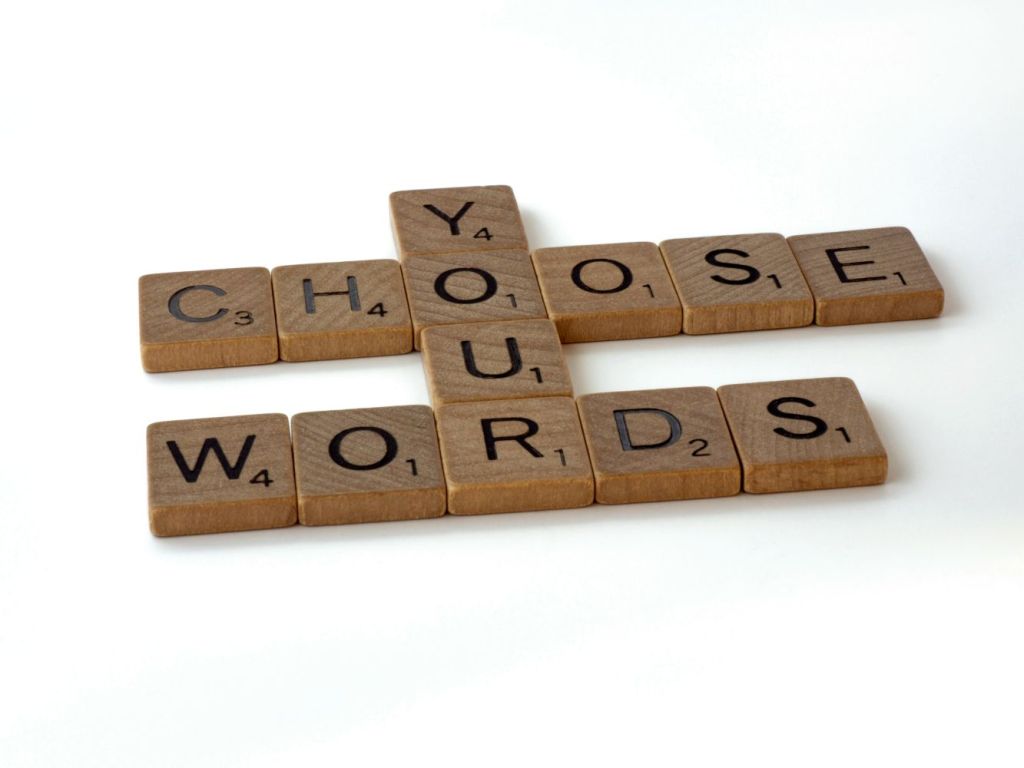
The words we use, hear, practice fundamentally shape how we experience reality.
If I were to present one of these sentences to different individuals…
“Our ’emotions’ colour our thoughts and influence our decisions.”
“Our ‘feelings’ colour our thoughts and influence our decisions.”
“Our ‘beliefs’ colour our thoughts and influence our decisions.”
“Our ‘health’ colour our thoughts and influence our decisions.”
“Our ‘culture’ colours our thoughts and influences our decisions.”
…nearly everyone would agree.
Each of these words seems undeniably influential in shaping our thoughts and actions. Yet, when isolated, belief is different from health, which again is different from emotions.
This article is about how the words we choose have a far stronger influence on decisions, than what they are collectively understood to mean.
The Neuroscience of Meaning
I recently read Lisa Feldman Barrett’s book and explored her research in the Theory of Constructed Emotion, which reshaped my understanding on how language influences almost everything.
Barrett suggests there isn’t a dedicated part of the brain singularly responsible for creating thoughts, decisions, or emotions. Rather, these experiences arise from complex interactions involving our entire brain, continuously integrating sensory input and past experiences.
And here’s the fascinating part: It’s not that our emotions alone dictate our lives, nor our rationality or creativity or health in isolation. Instead, it’s the linguistic scaffolding. These terms and the meanings we attach govern our interpretations and reactions.
In other words, our culture, upbringing, and relationships shape how our brains are wired and how we interpret the words we use. “Creativity” is different for you and me. So is “health”, and “anger”, or any word.
Imagine growing up in an environment where the word “rational” is consistently emphasized:
“She is rational,”
“She has rational ideas,”
“She solves problems rationally.”
Eventually, rationality becomes the lens through which you instinctively interpret reality.
“Our ‘rationality’ colours our thoughts and influences our decisions.”
The same is true of creativity. If you’re repeatedly celebrated as “creative,” your decisions naturally gravitate toward originality and innovation:
“Our ‘creativity’ colours our thoughts and influences our decisions.”
Unfortunately, negative labels also wield substantial power. Think of children repeatedly labeled as “stupid” or “dumb.” Over time, this becomes their default assumption about themselves:
“Our ‘stupidity’ colours our thoughts and influences our decisions.”
Any word, really, could slot neatly into this structure and shape our perceptions:
“Our ‘gods’ colour our thoughts and influence our decisions.”
“Our ‘hunger’ colours our thoughts and influences our decisions.”
“Our ‘friends’ colour our thoughts and influence our decisions.”
“Our ‘money’ colours our thoughts and influences our decisions.”
“Words carry weight, immense weight. Each term we use frequently not only describes reality, it constructs our experience of it.”
A powerful takeaway from Barrett’s theory isn’t that emotions or rationality are meaningless. It’s that the meaning we’ve learned to attach to these words is what shapes how we see the world and how the world sees us.
Words aren’t absolute truths; they are learned narratives, that mold our brains, perceptions, responses, and ultimately, our reality.
Therefore, next time you catch yourself claiming you’re “emotional,” “rational,” “creative,” or even “stupid,” pause. Consider that these labels aren’t truths, but they’re stories you’ve internalized.
So What Really Shapes Our Decisions?
In reality, every thought and decision arises from two interacting sources: your body’s sensations and your brain’s interpretation of those signals. They continuously interact, gathering data and updating your perceptions of the world around you.
Instead of fixating on whether it’s emotions or rationality or creativity or stupidity influencing decisions, adopt the more helpful practice of identifying your physiological state.
Start by listening to your body. Then let your brain interpret these sensations to understand reality more objectively. More accurate words will naturally follow.
The STOP framework I practice and advocate embodies this approach. By learning to pause (Sense), label your experiences clearly (Trace), act intentionally (Orchestrate), and reflect on outcomes (Ponder), you empower yourself to shape your reality intentionally rather than letting unconscious labels control your life.
Found this helpful?
If this article resonated with you, please share it on LinkedIn to help me spread the word on Mindful Productivity.
🍪 Fortune Cookie:
“Language is a powerful tool for influencing human behavior.”
Rather than fixating on what drives your decisions, focus on clarity. Learn to precisely identify your current state by equally attending to both bodily signals and mental processes.
Want to begin?
Start with the first step of the STOP framework: Sense your feelings. While feelings are universal, specific emotions like happiness, anger, and sadness are not.
Then, broaden your emotional and physiological vocabulary. If you’re describing everything as simply angry, disappointed, or lousy, you’re seeing the world in black and white. Enrich your perspective by developing your emotional granularity.
To learn how expanding your emotional vocabulary, what I call the “Emotional Spectrum”, can enhance decision-making and clarity, visit: Emotional Spectrum: Vocabulary of Feelings and Words.
 Nikhil Kabadi