Update: A More Refined Perspective on Step 2 – Trace

This article was an earlier version of the second step in the STOP Mindful Productivity Framework. Since then, my understanding of feelings, affect, and interoception has evolved, aligning more closely with the Theory of Constructed Emotion.

For the most updated and scientifically accurate explanation of Step 2 please visit the latest version here:
After recognizing emotions, the second step in the Mindful Productivity Framework is to label them – putting your feelings into words.
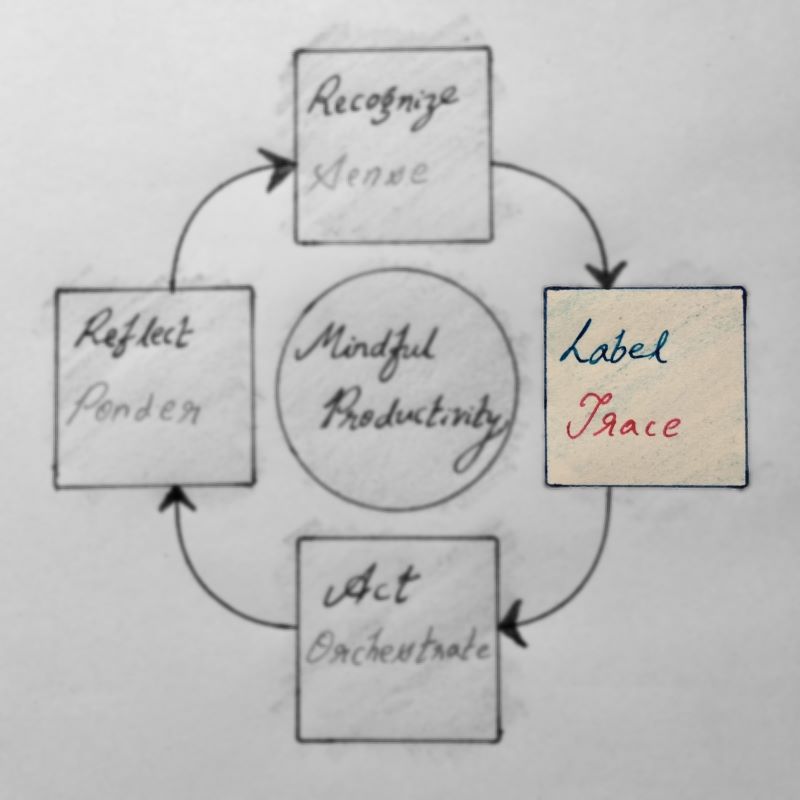
Tracing your emotions, i.e., putting them into words and recording them is a simple yet powerful way to create distance between emotional triggers and your reactions. This process hands the reins over to your reasonable mind, allowing it to step in and think objectively, free from the influence of the emotional mind.
Psychologists have long used emotion labeling as a self-regulation strategy to address anxiety, depression, alcohol addiction, chronic workaholism. But why does labeling emotions make us more mindful and help us make better decisions?
Mechanisms of Labelling
“Language is a powerful tool for influencing human behavior.”
The practice of labeling emotions, also known as affect labeling [#1], is a fascinating area in psychological research. Although studies are still uncovering its full potential, here’s why tracing your emotions works:
It reduces ambiguity
We are naturally averse to uncertainty. Labeling emotions reduces the anxiety caused by vague feelings, giving us a clearer starting point. [#2]
It calms the emotional brain
Putting emotions into words reduces activity in the amygdala, which is prone to intensifying fear and emotional responses. [#3]
It engages the logical brain
Language activates the prefrontal cortex, enabling a logical exploration of options and actions. [#3]
It reshapes personal beliefs
Language influences personal norms and internal beliefs about right and wrong. Articulating emotions helps us approach these norms aiding strategic decision making. [#4]
🍪 Fortune Cookie:
“Clear writing gives poor thinking nowhere to hide.” – Shane Parrish
Here’s how to make the most of tracing your emotions:
First, shift from “I’m stressed and burnt out” to “There is stress… There is burnout”. This simple practice, called decentering [#5], reduces the intensity of emotions by making them feel external and temporary, helping you think clearly and in an unbiased way.
Second, whenever possible, write your emotions down using pen and paper. Use this simple template:
- Task: What task are you about to begin?
- To put feelings into words we must first identify what those feelings are. This is where the first step of the Mindful Productivity Framework comes into play – Recognize (Sense) your emotions.
- Emotions: Write down the emotions using this format: “There is [feeling 1], There is [feeling 2]…”
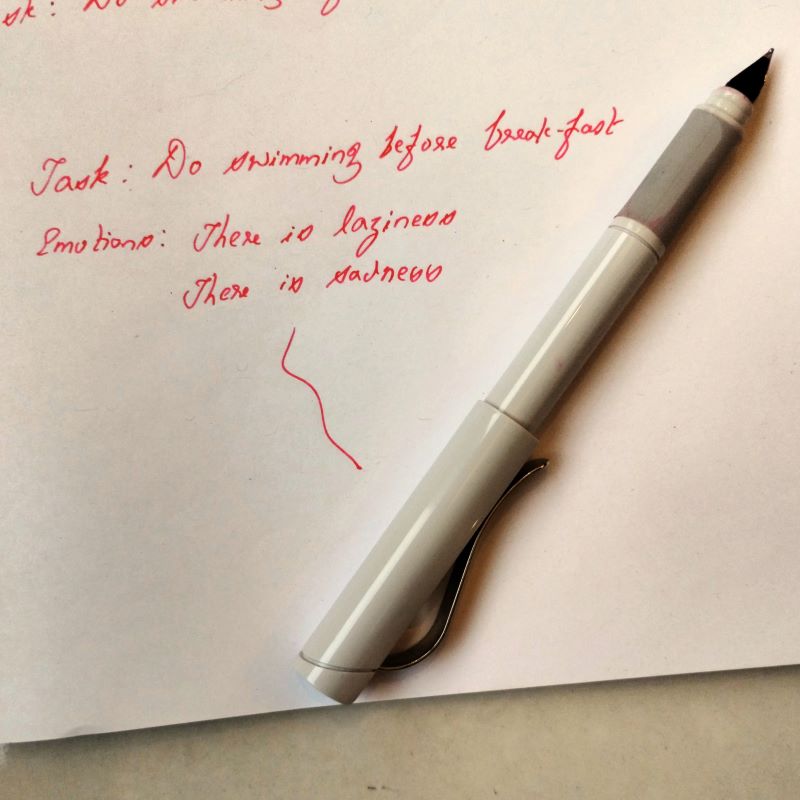
By tracing your emotions, you are not only labeling what you feel but also moving forward toward making intentional, wise decisions. You’re learning to observe emotions without judgment and allowing your reasonable mind to lead, ultimately paving the way for meaningful productivity.
Related topic:
References:
[#1]: Affect labeling is an implicit emotional regulation strategy.
 Nikhil Kabadi