
The six principles of work – agency, time-management, intelligence, relationships, adaptability, and leadership – are also the six applications of mindful productivity. Together, they guide both individual and organizational behavior, beliefs, and actions.
How a person or an entire organization approaches daily decisions in these areas determines whether they operate as a functional unit or a dysfunctional entity.
This approach to good decisions is essentially “strategy” – a reinforcement of desired behavior, regardless of emotional states, short-termism, or popular beliefs. And successful strategy isn’t about a single, game-changing decision.
Rather, the framework one relies to make decisions is far more critical than the individual decisions themselves. A start-up doesn’t become a thriving organization because of a single choice, just as an ordinary individual doesn’t become an extraordinary leader through one decisive moment.
Good decision-making depends on practicing great skills, learning from cause and effect, and adapting those skills with new information – ad nauseam.
Mindful Productivity is a collection of such great skills that help you think clearly, feel balanced, and act with confidence in your decisions. However, Mindful Productivity goes beyond a mere set of skills. It’s a framework designed to improve these six areas – Agency, Time-Management, Intelligence, Relationships, Adaptability, and Leadership – where decisions have the greatest impact on leading a fulfilling, meaningful life.
The Six Dimensions: A Structural Support System for a Good Work Life
These six areas aren’t new discoveries; they’ve always existed. What’s new is how you approach them through the lens of Mindful Productivity.
By explicitly filtering to these six areas, Mindful Productivity becomes a focused study and practice. It’s the Pareto principle in action: 80% of your happiness and fulfillment stems from 20% of your decisions in these key areas.
Mindful Agency

“Our beliefs about our ability have a profound effect on our ability”.
Agency is the self-awareness of your choices and the courage to pick one to move forward. Two core competencies shape agency:
- Self-Awareness: A mindfulness skill of recognizing, expressing, and managing feelings. This is the first step to intentional action, responsibility, and assertiveness.
- Emotional Regulation: Understanding personal thought patterns and regulating your actions and beliefs. It’s about navigating complex emotional landscape without being overwhelmed.
Mindful Time-Management

“Between what we understand as time-as-intuition and time-as-commodity lies the truth of time-as-a-moral-entity”.
Time-management is about intentionally choosing how and on what you spend your time. It’s not about filling every moment with activity but ensuring each action has meaning.
Mindful Productivity isn’t just about living intentionally – it’s about daily intentionality:
- Aligning daily actions to personal values.
- Embracing openness as a guide for actions and tasks.
- Confidently deciding what to say “no” to in life.
Mindful Intelligence

“Intelligence isn’t about applying your brain; it’s about listening to your body”.
Mindful Intelligence (MI) is about engaging all senses – body, cognition, and environment – to make rational choices. Our emotions exist to help us make better decisions, not hinder them.
The STOP framework (the foundational skill in Mindful Productivity) acknowledges that rational choices come from continual updates between cognitive predictions and bodily sensations. MI fosters:
- Purposeful innovation – conscious of people’s needs.
- Slow productivity – valuing quality over quantity.
- Wisdom – synthesizing emotional and reasonable minds.
Mindful Relationships

“Attunement to others demands a modicum of calm in oneself”. – Daniel Goleman
Managing emotions in others is a superpower – rooted in self-knowledge. When it comes to relationships, emotional intelligence is key: knowing your own feelings and using them to guide your interactions with others.
Mindful Productivity focuses on three aspects in relationships:
- The Person: Bringing full presence to every touch-point, recognizing each individual’s unique needs and aspirations.
- Healing: Everyone needs healing. Communication should address the need rather than just be an act.
- The Absolute: Expressing truth directly and unequivocally. Practicing “separation of tasks” and “confidence in others” to overcome inferiority or superiority complexes.
Mindful Adaptability

“Most of the times our opinions about the situation are far worse than the situation itself”.
Adaptability is crucial in a world where everything that arises eventually passes away (in Buddha’s words). True competitive advantage in today’s world lies in resilience, innovation, and openness to change.
Agency and adaptability form a powerful duo: agency offers stability, while adaptability grants flexibility. Mindful Productivity helps by:
- Developing a relationship with change – embracing it gracefully rather than resisting it.
- Aligning short-term requirements with long-term needs.
- Practicing radical open-mindedness – seeking help and knowledge to grow.
Mindful Leadership

“Before you can lead others, you must first take complete command of yourself”. – Naval Ravikant
Mindfulness scales up – from individual practice to organizational culture. From daily thoughtful decisions to community-wide ethics.
A leader is someone who guides – at home, at work, as a citizen, or as a mentor to oneself and others. Mindful Productivity paves the path to leadership by:
- Cultivating self-awareness and emotional intelligence, knowing our actions impact others.
- Prioritizing values over short-term gains, ensuring decisions align with ethical principles.
- Authenticity: Being true to yourself and leading those who resonate with your truth – rather than bending to the whims of the crowd.
These six principles encompass personal fulfillment and organizational impact, creating a ripple effect that begins with individual mindfulness and extends to leadership and culture. Their sequence mirrors the journey from self-awareness to interpersonal connection and eventually to leadership.
🍪 Fortune Cookie:
Mindful Productivity is, in Oliver Burkeman’s words, a “peaceful-but-energised approach to life [and work] that’s becoming more essential by the day“.
Such a “peaceful-but-energised approach” doesn’t happen by chance – it’s learned through deliberate practice. Below are three skills you can apply right away in three of the areas mentioned:
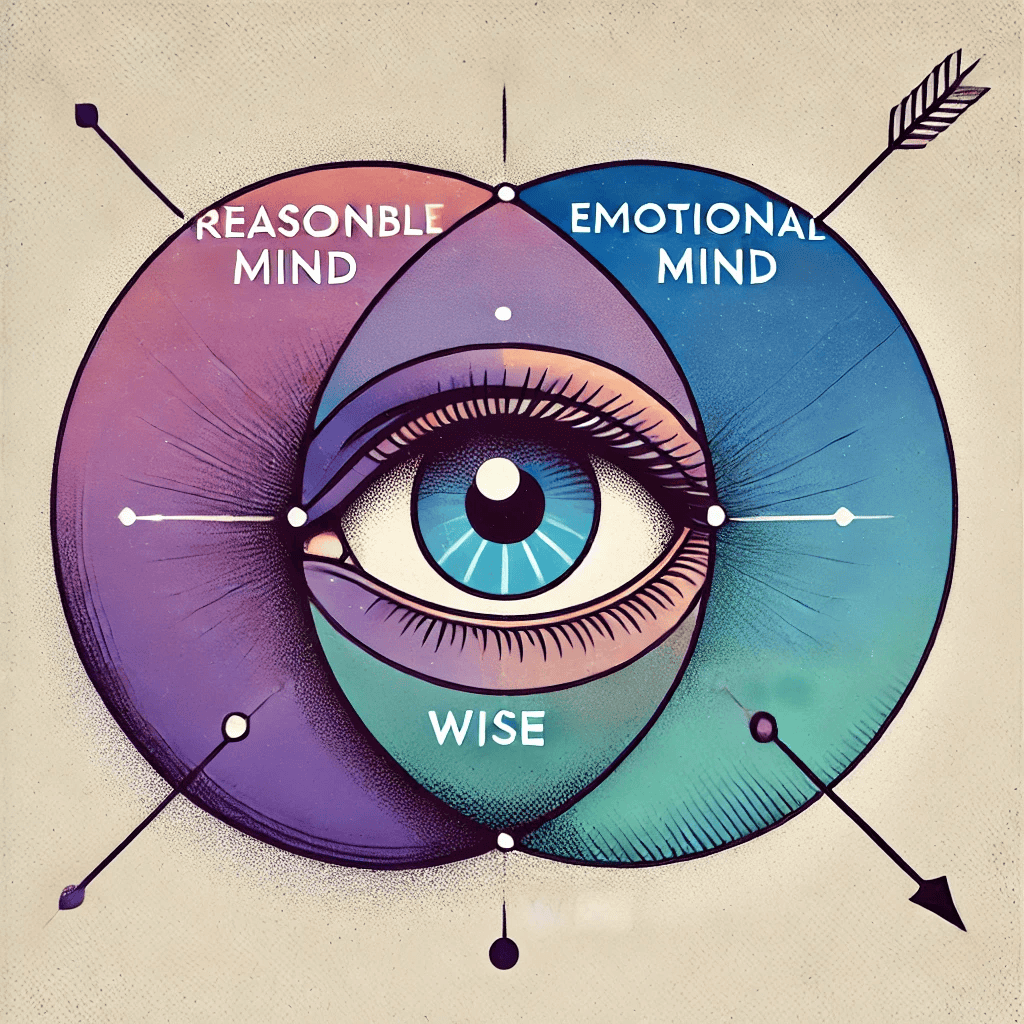
The Wise Mind Technique: A skill for developing Mindful Intelligence

Decision Clarity Window: A skill for developing Mindful Time-Management

Accumulating Daily Joys: A skill for developing Mindful Agency
 Nikhil Kabadi