When we hear the words “savior of mothers” used in the same breath to name a person, it need not necessarily belong to a saint.
This title belongs to Dr. Ignaz Semmelweis, a Hungarian physician and scientist born in 1818. And he has a very interesting story about him…
In the mid 1850’s, the mortality rate for women during childbirth from puerperal fevers (commonly known as postpartum infections) was as high as 18% in Vienna where he was a practicing scientist and an obstetrician.
During his quest to reduce this deathrate he stumbled upon a fascinating and counter-intuitive fact. He observed that women giving birth in the streets of Vienna had lower mortality rates than those in hospitals.
After pursuing this thread and finally discovering the reason, he published his observations and proposed a “radical truth” to mitigate these deaths in scientific journals, while also publishing a book.
This radical truth would go on to save millions of women and newborn babies.
But it did not go as planned for Dr. Semmelweis.
When Knowing Isn’t Enough
His observations and research findings conflicted and contradicted the “established scientific and medical opinions” of those times.
The medical fraternity was livid and deeply offended. They debunked his theory, since it pointed fingers at the doctors as the reason for the deaths.
They found the observations down-right preposterous. After all, how could the very “gentlemanly hands” that acted as the conduit of Gods will by bringing life on earth be the source of the problem?
The medical community refused to accommodate the new information presented by Semmelweis, because they were busy assimilating information that built on their existing practices on what they already knew.
Assimilation vs Accommodation
So many times, learning is not a function of gathering or collecting new information; it’s a function of questioning our existing knowledge.
For Semmelweis, the question—why women are dying in hospitals and not on the streets challenged everything he may have learned during his way to becoming an obstetrician.
But the same was not true for the medical fraternity who believed that their “theory of diseases” was unquestionable.
This unlearning to learn is the difference between assimilation and accommodation.
Assimilation is “integrating new knowledge into existing schemas…” without changing the structure of those schemas.
Whereas accommodation is adjusting one’s schema to fit new reality. In other words, to truly understand something, deeply and intimately, we have to remodel our mental space with new neural pathways.
It’s only when the old beliefs are questioned, inquired, and destabilized that new knowledge becomes integrated.
An ideal learning path is always a cyclical accommodation, followed by assimilation, followed by accommodation, and so on.
Research overwhelmingly shows that accommodation (which entails unlearning of prior ideas) is crucial for correcting misconceptions and achieving robust understanding.
It’s then easy to see, why the medical fraternity of Vienna found it so hard to accept the radical truth proposed by Semmelweis. Their mental models weren’t programmed for “accommodation.” Unlearning was not an option.
But this is not the story of the medical community of Vienna… Such failures by piling knowledge without unlearning beliefs is all too common—Eastman Kodak, Nokia, Blockbuster, to name a few.
This story is about Dr. Ignaz Semmelweis and why is unlearning so hard.
Psychology of Unlearning
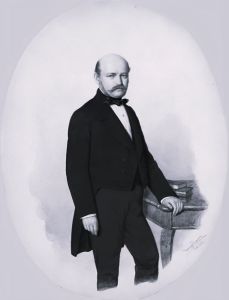
Dr. Ignaz Semmelweis
1818-1865
Image attribution: By Auguste Alexis Canzi – Semmelweis Museum – virtual exhibition (cropped to remove frame), Public Domain, https://commons.wikimedia.org/w/index.php?curid=122782471
After being sidelined and heaped with unfavorable reviews of his work, Semmelweis went all out and lashed his critics in a series of open letters that were argumentative and provocative—sometimes downright rude and hurtful. He denounced his critics as irresponsible murderers.
Inspite of cajoling by his good friends and requesting him to broaden his research, he rejected to offer any theoretical explanation or expand on his findings. He instead chose to continue his lamentation against his critics that only antagonized the medical establishment further.
To cut the long story short, Dr. Semmelweis ended up in a mental asylum and died confined in a darkened room after severely beaten by the guards.
Unlearning, unlike learning is very uncomfortable (although, neurologically they are the same. Learning that one’s prior knowledge is wrong is still new knowledge).
To look at self and to realize that you are something other than what you thought you were, is unnerving.
But meaningful change, the one we call transformation, doesn’t happen by gathering knowledge, facts, or processes. It happens naturally when we peel away illusions, question our beliefs, and intentionally let go of our attachments. So we can “see”.
Neither the medical community, nor Semmelweis wanted to see. They were blinded by their learning.
Once the truth was put forth, from then on, the only thing that mattered was assimilation of facts and information that confirmed each one’s beliefs. No one was willing to accommodate the uncertainty and uneasiness of questioning those deeply entrenched beliefs.
The Radical Truth
If you have been wondering what was the radical truth that Semmelweis proposed, it hurts to put it in a sentence.
It’s profoundly simple and unbelievable that someone could lose their life for saying it aloud: “wash your hands.”
This was the sole reason why so many women and their babies lost their lives, because the obstetricians did not wash their gentlemanly hands before making a delivery.
Semmelweis findings earned widespread acceptance only years after his death, when Louis Pasteur confirmed the germ theory, giving Semmelweis’ observations a theoretical explanation, and Joseph Lister, acting on Pasteur’s research, practiced and operated using hygienic methods with great success.
Liked the article?
If it sparked a thought or made you pause, consider sharing it on LinkedIn – it might do the same for someone else.
🍪 Fortune Cookie:
“The only true wisdom is in knowing you know nothing.” – Socrates
Accommodation requires deliberately creating space for doubt, humility, and not-knowing.
But how do you practice not-knowing, when our entire lives we have been bombarded with knowing?
This is where the Mindful Productivity skill Socratic Unlearning makes space for intentional ignorance—and turns unlearning into a concrete, rewarding practice.
Socratic Unlearning skill is a two-step process for releasing outdated mental models:
1. Epistemic reflection: uncover hidden beliefs shaping your decisions, and
2. Socratic inquiry: question those beliefs to loosen their grip and make space for more adaptive beliefs.
Socratic Unlearning is a guided self-inquiry skill, and such inquiries are shown to reliably produce positive, personal transformative outcomes, not just anecdotal breakthroughs.
Simply put, Socratic Unlearning makes better decisions possible.
 Nikhil Kabadi