When it comes to making good decisions with confidence, how we perceive the influence of time makes a big difference.
Time can be understood either as a concept that guides the division of labor according to some natural rhythm or as a commodity – just like money and population – something to be controlled and systematized.
Most productivity tools or techniques view time as a commodity and fewer as a concept. However, I recently came across a very different notion of time – as a moral entity. A stoic standpoint that time’s value lies in its use for cultivating virtue – nothing more, nothing less.
To understand why time is viewed as a moral virtue in stoic philosophy, we need to understand these three principles that shape stoic thinking; Prosoche, Prohairesis, and Phronesis.
Prosoche: The Practice of Mindful Awareness
Greek word: προσοχή | Pronunciation: pro soh khay

Prosoche is the stoic practice of attention and awareness – monitoring your impressions*, emotions, and actions in the present moment. It’s a constant vigilance of your attention to ensure your moments are spent aligned with virtue.
Epictetus, the stoic philosopher, frequently underscored the importance of Prosoche in his discourses. Marcus Aurelius, another stoic philosopher, did not explicitly mention Prosoche by name but embodied it as his guiding principle.
Epictetus’s focus on Prosoche revolved around developing a deliberate vigilance on what is truly in our control.
By observing each impression, reminding ourselves of our moral purpose, and concentrating on what lies within our sphere of control, we transform moment-to-moment awareness into a sustained, awakened way of living.
*Footnote on Impression: In stoicism, an impression is the initial perception of reality that triggers a chain of thoughts. A modern neuroscience parallel is interoception – the process by which the brain interprets internal bodily signals to generate emotional awareness.
Example: You see your boss walk in unexpectedly. Your immediate perception is an “impression.” You then sense your shoulders tighten, your face muscles contract, and you freeze. You start feeling tension. That feeling is interoception, and you label it “tension.” From there, your monkey brain might take over!
Prohairesis: The Emphasis on Moral Choice
Greek word: προαίρεσις | Pronunciation: pro hi ree sis
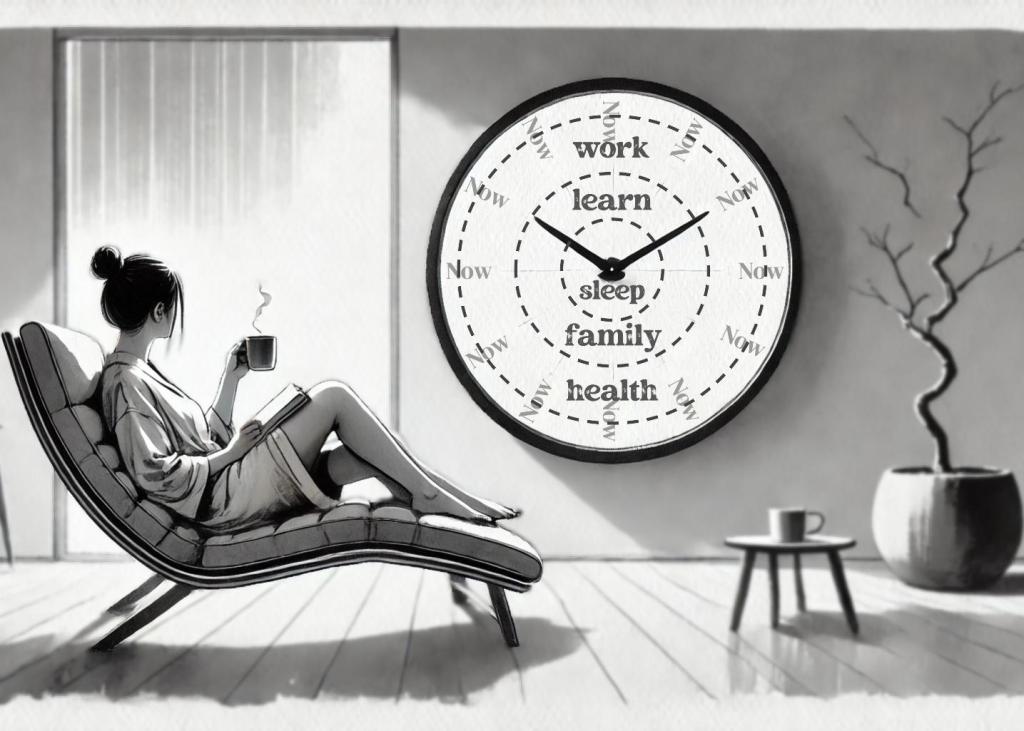
Prohairesis is the stoic principle referring to the core of our moral agency – our capacity to choose. What we can always choose are our attitudes and intentions. Understanding that Prohairesis is within your control liberates you from blaming circumstances. It also underpins stoic teachings on focusing on what you can change and letting go of worry over what you cannot.
Prohairesis is so central to stoicism that Epictetus made it his guiding principle in all his teachings. It’s also vital to how Zeno, Seneca and other stoic philosophers lived.
When Prohairesis merges with Prosoche, it becomes the practice of relentlessly directing our attention back to where we have agency.
Phronesis: A Life of Practical Wisdom
Greek word: φρόνησις | Pronunciation: fro knee sus
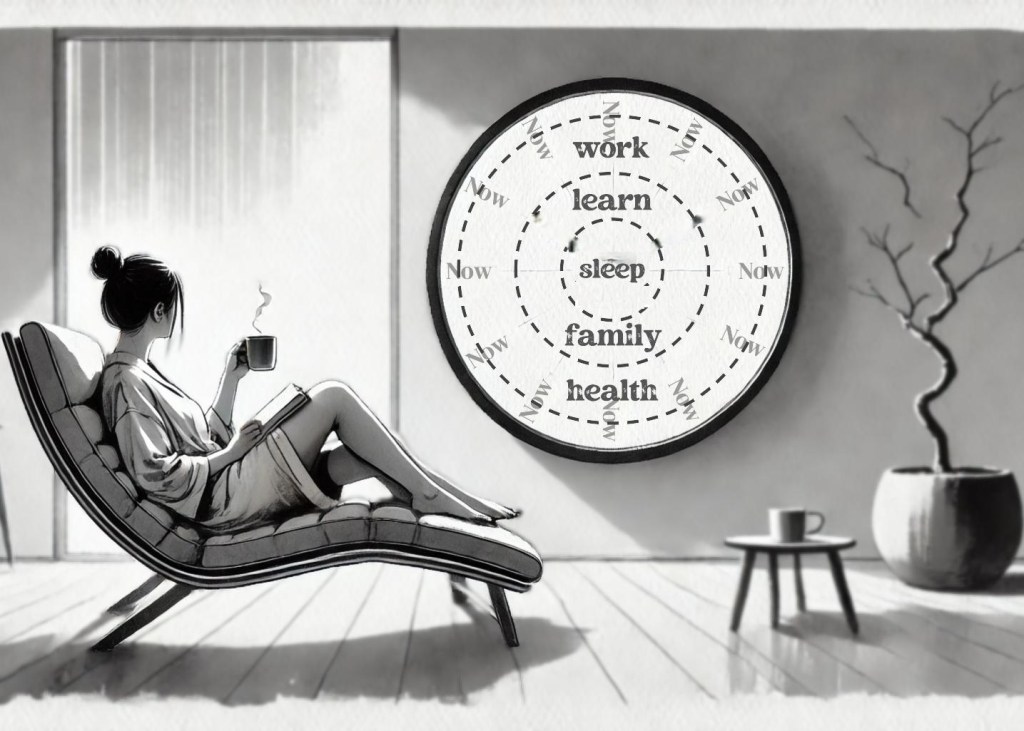
Phronesis is a core stoic philosophy on prudence – discerning the right course of action in everyday life. It’s one of the four cardinal virtues in stoicism, alongside courage, justice, and temperance (also known as Aristotelian virtues).
Often translated as moral insight, Phronesis is the ability to discern the appropriate action in any circumstance, guided by reason and virtue. For the stoics, Phronesis encompasses the wisdom to judge correctly and live in harmony with nature, ensuring that everyday decisions reflect rational and ethical choices rather than impulses and passions.
It also involves recognizing what is truly good – moral values – and what is indifferent – wealth, lifespan, reputation, recognition.
These triskelia – Prosoche, Prohairesis, and Phronesis – guide us to a different perspective on time. Metaphysically, time is part of the universe’s fabric but not contingent on our personal relationship to it. Time matters only insofar as it’s used to cultivate virtue and integrate into a meaningful, virtuous life.
Mindful Time Management: Time as Virtue
From a stoic perspective, time isn’t just “what” you pay attention to (e.g., exercise, family, sleep, leisure, job), but “how” you frame and prioritize those aspects of life so they support virtue and align with your deeper nature.
Every area of life aligned with your own value system becomes an opportunity to exercise Prosoche (attentiveness) and refine Prohairesis (moral choices), so you gradually embody Phronesis (wisdom) and live in harmony with your true nature – not Epictetus’s, Seneca’s, Elon Musk’s, Tim Ferriss’s, or anyone else’s.
For stoics, time’s value lies in its use to cultivate virtue. In moments of leisure or idleness, time is neither wasted nor misused – it simply is. Unlike today’s obsession with filling every moment, stoics believed each action should be meaningful.
Found this helpful?
If this article resonated with you, please share it on LinkedIn to help me spread the word on Mindful Productivity.
🍪 Fortune Cookie:
“It is not that we have a short time to live, but that we waste a lot of it… Life is long if you know how to use it” – Seneca
Philosophy offers wisdom, but practice makes it tangible. While the stoics understood time as a moral exercise, we still need structured tools to apply it in daily life. That’s where ProProPhro Circles comes in – a mindful time-management practice built on Prosoche, Prohairesis, and Phronesis.
If you’re pondering any of the following in your life today, ProProPhro Circles might offer the clarity you seek:
- How many hours should I allocate to [activity/opportunity]?
- Is now the right time to embark on [activity/opportunity]?
- Should I accept or decline [activity/opportunity]?
- What are my goals for the coming year?
- Am I devoting too much or too little time to [activity/opportunity]?
- Is my daily routine enhancing my life or diminishing it?
If you’re curious and in Bengaluru, reach out to me on LinkedIn. I’d love to demonstrate how to integrate this practice into your life, guiding you toward a more intentional and virtuous daily routine.

